
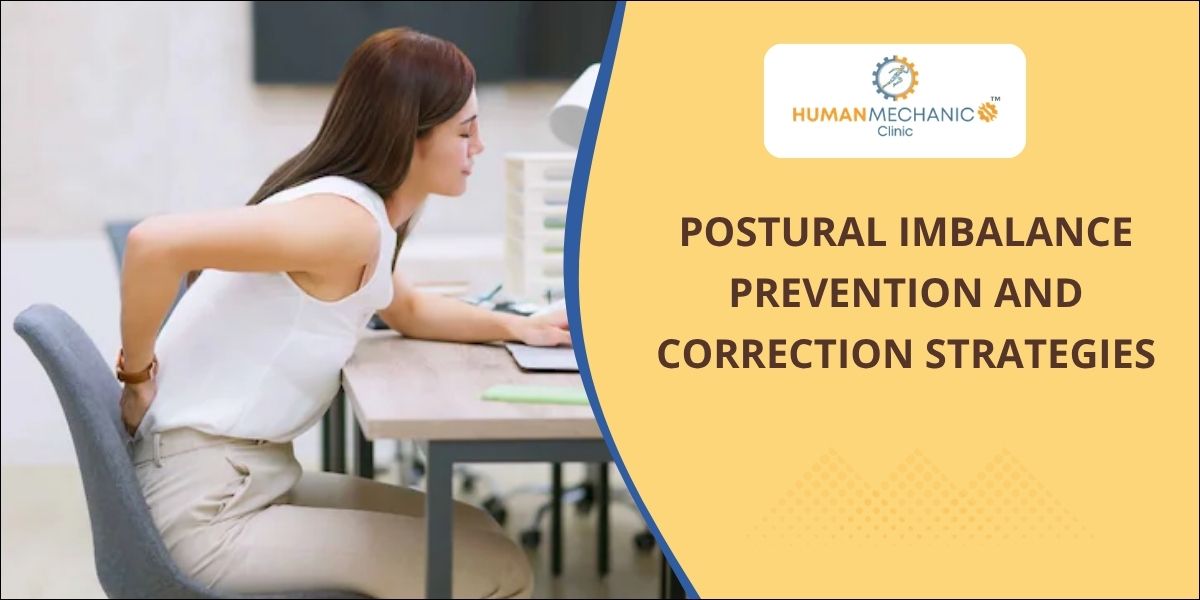
Postural Imbalances from Desk Jobs: Prevention and Correction Strategies
Sitting at a desk for several hours may feel like a normal part of office life, but your body may slowly start paying the price. Long working hours, poor sitting positions, prolonged screen time, and limited movement can affect the natural alignment of your spine and joints. Over time, this may lead to postural imbalances, stiffness, muscle tightness, and recurring pain.
The good news is that many desk-related posture problems can be prevented and corrected with simple daily changes, regular movement, and appropriate professional guidance.
What Are Postural Imbalances?
Postural imbalance occurs when different muscles and joints are not working in their ideal alignment. Some muscles may become tight or overactive, while others become weak due to prolonged inactivity.
For people working at a desk, common examples include rounded shoulders, forward head posture, an exaggerated curve in the lower back, and uneven sitting habits. These changes may develop gradually, so you may not notice them until discomfort becomes frequent.
How Desk Jobs Affect Your Posture
Spending long periods sitting in the same position can place extra stress on certain parts of the body. Looking down at a laptop or phone can encourage the head and neck to move forward. At the same time, leaning toward a screen may cause the shoulders to round.
Poor sitting habits can also affect the lower back and hips. When you sit for hours without changing position, the hip muscles may become tight while some supporting muscles become less active.
Over time, these habits can contribute to:
- Neck and shoulder stiffness
- Upper and lower back pain
- Headaches related to muscle tension
- Rounded shoulders
- Forward head posture
- Hip tightness
- Reduced flexibility
- Muscle fatigue
- Poor movement patterns
Warning Signs You Should Not Ignore
Your body often gives early signals when your posture needs attention. Feeling stiff after sitting, frequently stretching your neck or shoulders, experiencing back discomfort at the end of the workday, or noticing that one shoulder sits higher than the other may indicate a postural issue.
You may also notice that you naturally lean to one side while sitting or standing. If pain or stiffness continues despite making basic changes, a professional posture assessment can help identify the underlying problem.
Prevention Strategies for Desk Workers
1. Set Up Your Workstation Properly
Your computer screen should ideally be positioned so you do not have to constantly bend your neck forward. Keep your back supported, shoulders relaxed, and feet comfortably supported on the floor.
Your keyboard and mouse should be positioned close enough that you do not have to repeatedly reach forward.
2. Take Regular Movement Breaks
One of the simplest ways to reduce the effects of prolonged sitting is to move regularly. Instead of sitting continuously for several hours, stand up, walk around, or perform a few gentle movements throughout the day.
Even short movement breaks can help reduce stiffness and remind your body to change positions.
3. Strengthen Weak Muscles
Posture correction is not only about sitting straight. Your muscles need enough strength and endurance to support proper alignment.
Exercises that strengthen the core, upper back, glutes, and other postural muscles can be useful. However, exercises should be selected according to your individual needs rather than following random online routines.
4. Stretch Tight Muscles
Gentle stretching can help improve mobility in areas that become tight from prolonged sitting, particularly the chest, neck, shoulders, hip flexors, and back.
Avoid forcing a stretch or exercising through sharp pain. Consistency is generally more useful than aggressive stretching.
5. Be Mindful of Your Daily Habits
Posture is not just about your office chair. Your phone usage, driving position, sleeping habits, and the way you carry bags can also influence how your body moves.
Try to become more aware of your body position throughout the day and change positions regularly.
How Can Posture Be Corrected?
If poor posture has already become a habit, simply telling yourself to “sit straight” may not be enough. Effective posture correction usually involves understanding why the imbalance has developed.
A professional assessment can evaluate your posture, movement patterns, flexibility, muscle strength, and areas of discomfort. Based on the findings, a suitable plan may include corrective exercises, stretching, mobility work, manual techniques, ergonomic advice, and movement education.
The goal is not to maintain one rigid position all day. Healthy posture is more about balanced movement, proper muscle function, and the ability to change positions comfortably.
When Should You Seek Professional Help?
If neck, shoulder, or back pain keeps returning, affects your daily activities, or does not improve with basic workplace adjustments, consider getting professional guidance.
A physiotherapist or posture specialist can help identify the contributing factors instead of focusing only on the painful area. Early correction may also help prevent poor movement habits from becoming more difficult to change.
Posture Correction Treatment in Pune at Human Mechanic Clinic
Human Mechanic Clinic provides posture correction treatment in Pune for people dealing with desk-job-related posture problems, stiffness, muscle imbalance, and movement difficulties. With a focus on identifying the underlying causes of poor posture, the clinic can provide personalized guidance based on individual needs. Treatment may include corrective exercises, mobility training, strengthening, manual therapy, and ergonomic advice to support better posture and movement. If you are searching for posture correction in Pune or posture correction treatment near you, Human Mechanic Clinic can be considered for an individualized assessment and treatment plan.
Frequently Asked Questions
1. Can desk work cause poor posture?
Yes. Prolonged sitting, poor workstation setup, and limited movement can contribute to postural imbalances.
2. How can I improve my posture at work?
Adjust your workstation, keep your screen at a comfortable height, support your back, and take regular movement breaks.
3. Can posture correction reduce back pain?
Correcting contributing movement and muscle imbalances may help reduce posture-related discomfort, depending on the underlying cause.
4. How long does posture correction take?
It varies from person to person. Improvement depends on the severity of the imbalance, daily habits, consistency, and the treatment plan.
5. Should I see a physiotherapist for poor posture?
If posture problems are persistent or associated with recurring pain or stiffness, professional assessment can help identify the underlying issues.