
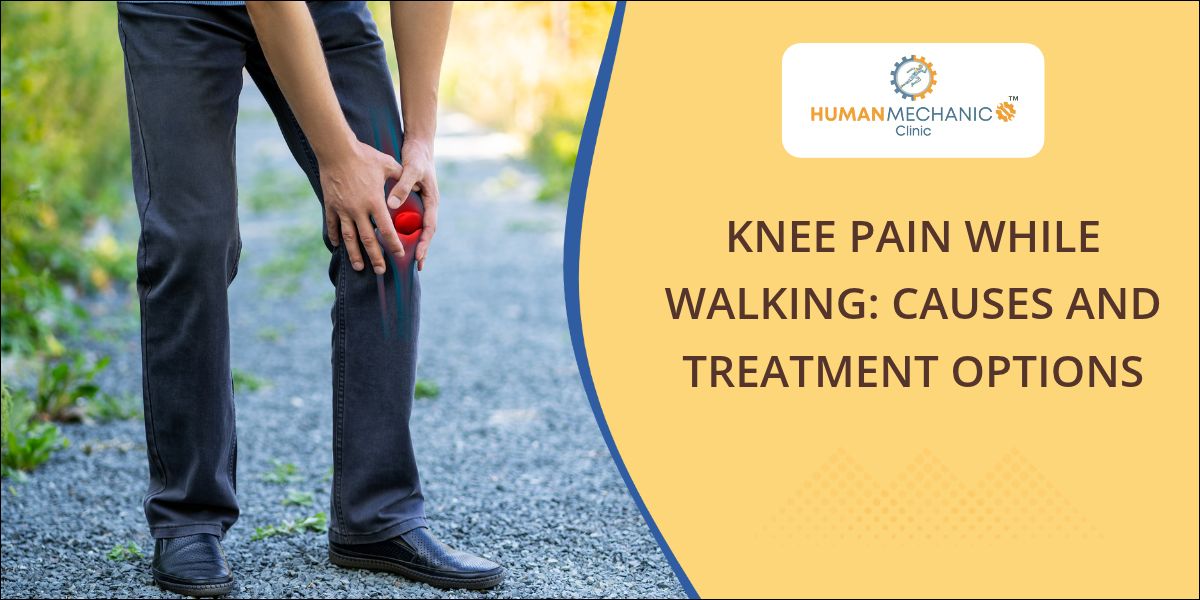
Knee Pain While Walking: Causes and Treatment Options
Knee pain while walking is most often caused by knee osteoarthritis, pain around the kneecap (patellofemoral pain), meniscus or ligament injuries, tendon irritation, or extra load from body weight, weak muscles and poor footwear. Mild pain may ease with rest, activity changes and strengthening exercises. If the knee is swollen, locks, gives way, or the pain does not settle in a few weeks, it should be examined by a doctor or physiotherapist so the right treatment can be planned.
This guide explains common causes of knee pain during walking, simple self-care steps, treatment options and the warning signs to watch for.
How Walking Affects the Knee
The knee joins the thigh bone to the shin bone, with the kneecap sitting in front. Cartilage covers the bone ends, and two C-shaped cushions called menisci absorb shock. Ligaments keep the joint stable, while the thigh, hip and calf muscles control movement. Each step places load on these structures. When one of them is worn, irritated or weak, walking can bring on pain.
Common Causes of Knee Pain While Walking
Knee osteoarthritis
Osteoarthritis is gradual wear of the cartilage in the joint. It is common after middle age. Typical signs include pain with walking or climbing stairs, stiffness in the morning or after sitting, a grinding feeling and sometimes swelling. Read about physiotherapy for knee osteoarthritis.
Patellofemoral pain (runner’s knee)
This causes a dull ache around or behind the kneecap. It is often worse when climbing stairs, walking downhill, squatting or after sitting for long. Muscle imbalance and overuse are common contributors.
Meniscus tear
A meniscus can tear with a twisting injury or wear down with age. It may cause pain along the joint line, swelling, catching or a feeling that the knee locks.
Ligament injury
Injuries to ligaments such as the ACL or MCL often happen during sports or falls. The knee may feel unstable or give way while walking. Our article on physiotherapy after a knee injury explains how rehabilitation fits in.
Tendon problems
Patellar tendinopathy causes pain just below the kneecap. Iliotibial band irritation causes pain on the outer side of the knee, especially during longer walks or runs.
Bursitis
Small fluid-filled sacs around the knee can become inflamed from kneeling or overuse, causing localised swelling and tenderness.
Other factors
- Excess body weight, which increases load on the knees
- Weak thigh and hip muscles
- Flat feet or foot alignment problems
- Unsupportive or worn-out footwear
- Inflammatory arthritis such as rheumatoid arthritis or gout
Symptoms That Give Clues
- Pain at the front of the knee: often kneecap or tendon related
- Pain on the inner side with stiffness: common in osteoarthritis
- Catching or locking: may suggest a meniscus problem
- Giving way: may point to a ligament injury or muscle weakness
- Swelling, warmth or redness: may indicate inflammation or infection
Self-Care for Mild Knee Pain
- Reduce activities that clearly worsen the pain for a short period, without stopping movement altogether
- Apply ice wrapped in a cloth for 10 to 15 minutes after activity
- Walk on flat, even surfaces and use comfortable, cushioned shoes
- Break long walks into shorter sessions
- Avoid deep squatting and sitting cross-legged if they hurt
- Maintain a healthy body weight
How Is Knee Pain Assessed?
An assessment usually includes questions about when and how the pain started, a physical examination of the knee, hip and foot, and observation of how you walk. Depending on the findings, a doctor may advise an X-ray, ultrasound, MRI or blood tests.
Treatment Options for Knee Pain While Walking
Physiotherapy and exercise
Exercise is a core part of managing many knee problems. A physiotherapist may focus on:
- Strengthening the thigh (quadriceps), hamstring, hip and calf muscles
- Improving flexibility and range of movement
- Balance and walking training
- Manual therapy and taping where suitable
- Guidance on returning to walking, stairs and sport
Supportive therapies
Depending on the condition, therapies such as heat, cold, electrotherapy, laser or shockwave therapy may be used along with exercise. These are chosen after assessment.
Medical treatment
A doctor may prescribe pain-relieving or anti-inflammatory medicines, and in some cases suggest injections. Knee braces or walking aids may be recommended for short periods.
Surgery
Surgery may be considered for certain ligament or meniscus injuries, or severe arthritis that does not respond to other treatment. An orthopaedic surgeon decides this after evaluation.
When to Seek Urgent Help
- You cannot put weight on the leg
- The knee is very swollen, hot or red, or you have a fever
- The knee looks deformed after an injury
- The knee locks and you cannot straighten it
- Calf pain and swelling appear along with knee pain
Our post on knee pain and when to seek help covers these signs in more detail.
Frequently Asked Questions
Why does my knee hurt when I walk but not when I rest?
Pain that appears with walking and settles with rest is common in knee osteoarthritis, patellofemoral pain and overuse problems, because walking loads the joint and surrounding tissues. A proper examination helps confirm the exact cause.
Should I keep walking if my knee hurts?
Gentle walking within a comfortable range is often helpful for conditions like osteoarthritis, as it keeps the joint moving and muscles active. If walking causes sharp pain, swelling or limping, reduce it and get your knee checked.
Can physiotherapy help knee pain while walking?
Physiotherapy is commonly used for many causes of knee pain. It usually includes strengthening the thigh and hip muscles, improving flexibility and balance, and guidance on activity. The plan depends on your diagnosis.
Is knee pain while walking a sign of arthritis?
It can be, especially after the age of 40 or if there is stiffness in the morning, grinding or swelling. However, other causes such as meniscus problems, tendon irritation or kneecap pain are also common. An X-ray and examination can help.
When should I see a doctor for knee pain?
See a doctor if the knee is very swollen, red or warm, if you cannot bear weight, if it locks or gives way, if the pain follows an injury, or if it lasts more than a few weeks despite rest.
Do shoes affect knee pain?
Footwear can influence how load passes through the legs. Cushioned, supportive shoes suited to your foot type may make walking more comfortable for some people. Very worn-out or unsupportive shoes may add strain.
Book a Knee Assessment at Human Mechanic Clinic
If knee pain is making walks, stairs or work harder, an assessment can help identify contributing factors and plan suitable care. Human Mechanic Clinic is a physiotherapy and chiropractic clinic in Pune led by Dr. Pravin Patil, Physiotherapist and Chiropractor. Learn more about the clinic.
- Hadapsar Clinic: Office No 401, Gandharv Capital, Bhosale Nagar, Hadapsar, Pune 411028. Phone: +91 73874 11009.
- Koregaon Park Clinic: Flat no. 210, Gera Gardens, Building 1, near Blue Diamond Hotel, Koregaon Park, Pune 411001. Phone: +91 89566 99060